
Roof Leak Detection in Dallas: How to Find Hidden Leaks Before They Damage Your Building
If you’ve ever dealt with a roof leak in a commercial building, you know the damage doesn’t stop at the ceiling. Once water finds a path into your insulation or deck, it spreads — silently. By the time you see a stain on the ceiling tile, the leak has probably been active for weeks.
As the owner of Shepherd Commercial Roofing, I’ve helped hundreds of Dallas property owners locate and fix hidden roof leaks before they turned into six-figure repair jobs.
The secret? Professional roof leak detection in Dallas using infrared imaging, moisture scanning, and detailed roof condition analysis. Here’s how it works — and why it’s one of the smartest investments you can make for your property.
Why Hidden Roof Leaks Are So Dangerous
Most people think of a roof leak as a small drip from the ceiling — but in reality, moisture spreads horizontally across insulation and decking before it ever appears inside.
That trapped water leads to:
- Mold growth in insulation and ceiling tiles
- Rusted fasteners and decking
- Reduced R-value and higher energy bills
- Premature membrane failure
Dallas’ extreme temperature swings make it worse — the constant expansion and contraction forces moisture deeper into the roof system.
🧱 Pro Tip:
If your roof has already leaked once, it’s likely hiding moisture in other areas. A roof leak detection in Dallas can uncover it before it damages your structure.
Common Signs You Might Have a Hidden Leak
Even if you don’t see dripping water, your roof might already be compromised. Watch for:
- Bubbling or blistering on flat roof membranes
- Musty odors in upper floors
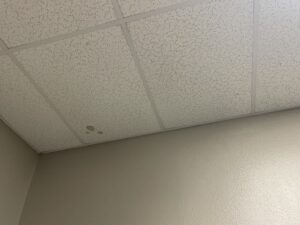
- Discolored or sagging ceiling tiles
- High humidity or increased HVAC load
- Dark seams or streaks around flashing
These are early warning signs that moisture has made its way beneath the roof membrane.
Infrared Roof Leak Detection in Dallas Explained
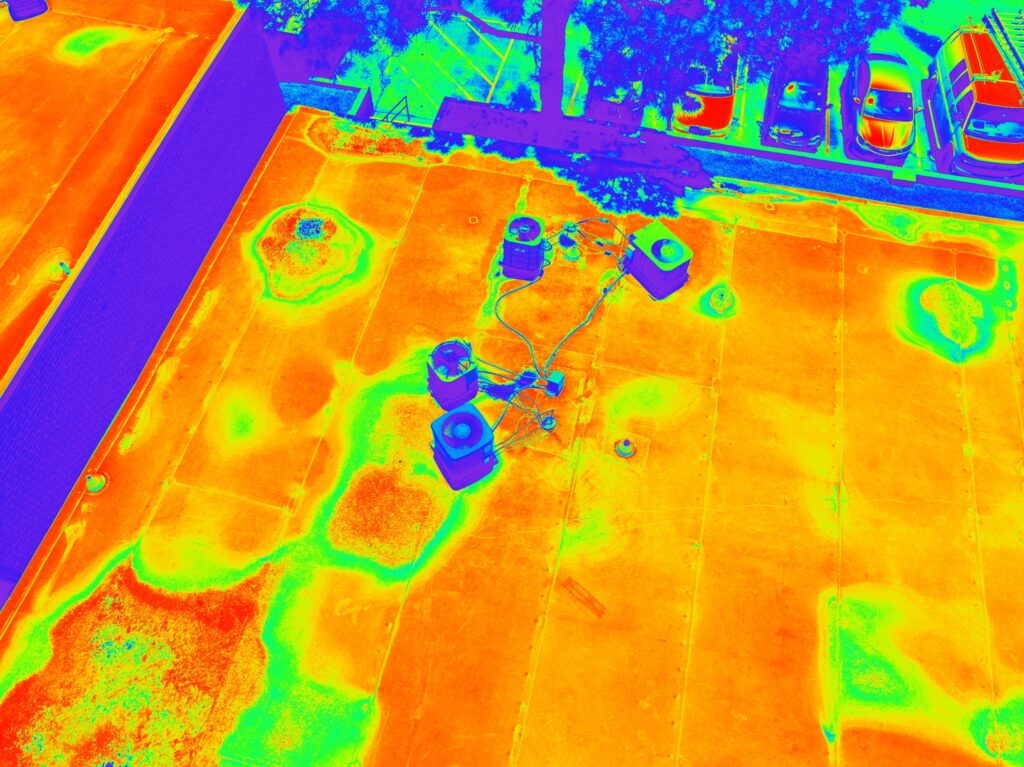
Infrared thermography is one of the most accurate and non-invasive ways to locate leaks.
It works by detecting temperature differences on the roof’s surface — wet insulation holds heat longer than dry areas, creating a visible pattern through the infrared camera.
At Shepherd Commercial Roofing, we perform infrared roof leak detection in Dallas at dusk or dawn when surface temperatures contrast the most. That’s when hidden moisture shows up clearly in the thermal scan.
🧠 Pro Insight:
Infrared technology can find leaks long before they’re visible to the naked eye, saving property managers thousands in tear-offs and interior damage.
How Moisture Scanning Protects Your Roof Investment
Infrared imaging is just the first step — to confirm results, we use electronic moisture scanning equipment.
This tool measures conductivity through the roof system to identify the exact depth and extent of trapped water. It’s ideal for:
- TPO and PVC membranes
- Modified bitumen roofs
- EPDM rubber systems
By pinpointing only the affected sections, we can repair or replace selectively, instead of tearing off the entire roof.
📘 Resource: The National Roofing Contractors Association (NRCA) notes that infrared and capacitance testing are the most reliable methods for detecting moisture in low-slope commercial roofs.
When to Schedule a Professional Roof Leak Inspection in Dallas
Here in Dallas, the best times to schedule a roof leak detection scan are:
- Early spring: after winter freeze-thaw cycles
- Late fall: before heavy rains and hail season
You should also consider an inspection:
- After major storms
- Before a real estate transaction or capital budget planning
- When your maintenance staff can’t locate the source of a leak
Shepherd Commercial Roofing’s Leak Detection Process
When you call Shepherd Commercial Roofing for roof leak detection in Dallas, here’s what to expect:
- Visual Survey – We inspect seams, flashing, drains, and penetrations.
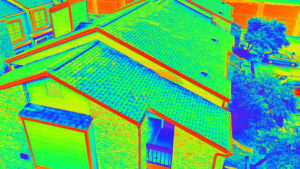
- Infrared Scan – Captures surface heat signatures of hidden moisture.
- Moisture Verification – We use an electronic scanner to confirm readings.
- Detailed Report – You receive marked photos, moisture maps, and repair recommendations.
- Repair Options – We outline cost-effective solutions, from localized patching to coating restoration systems.
🧱 David’s Tip:
This kind of data helps you plan — not guess. You’ll know exactly what areas to budget for instead of replacing an entire roof prematurely.